Impossible List - 15 September
How far I've come over the course of the last month in regards to the impossible list of goals I've set for myself.

"How do we bring the town centre back?" I think that's the wrong question.
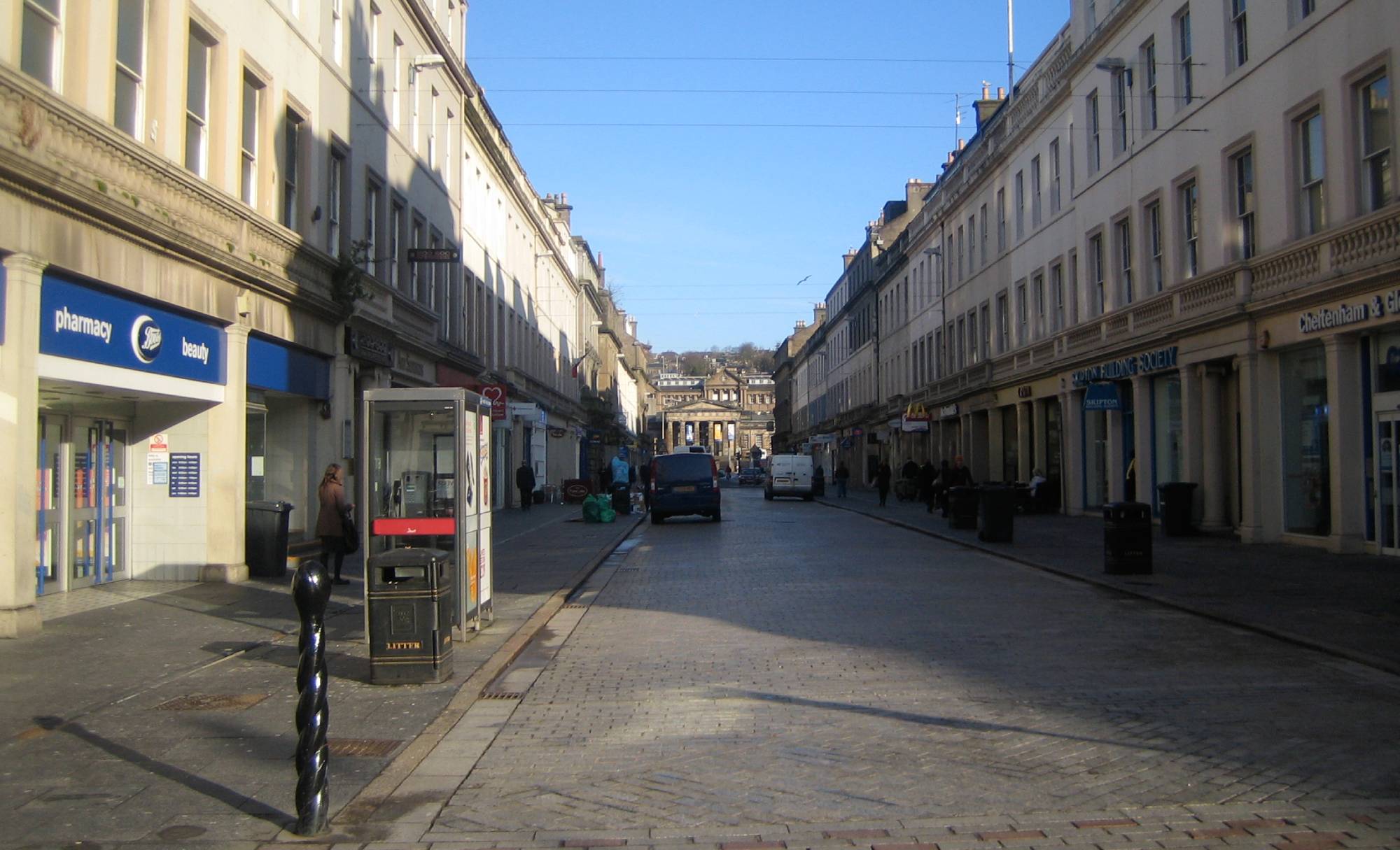
There is a question that gets asked in almost every town in Britain.
Usually by somebody standing on a pedestrianised high street on a Tuesday afternoon, looking around at the empty shop fronts and wondering what happened.
The question is simple:
"How do we bring the town centre back?"
I think that's the wrong question.
Not because town centres aren't struggling. Many clearly are. The wrong part is the assumption hidden inside it; that the town centre is a thing that has temporarily stopped working and simply needs to be restarted.
Like a laptop.
The problem is that town centres didn't become empty because they broke.
They became empty because they succeeded.
For most of the twentieth century, town centres existed to solve a series of practical problems. If you wanted to buy shoes, you went into town. If you needed a bank, you went into town. If you wanted to book a holiday, pay a bill, buy a birthday card, collect a prescription, browse a record shop or argue with a librarian about overdue books, you went into town.
The town centre wasn't competing with anything. It was the interface through which society operated.
Then, very gradually, technology started deleting reasons to visit.
The first casualty was information. Travel agents, estate agents and bank branches all became less important when the internet arrived carrying vast quantities of information directly into our homes.
Then came commerce.
Amazon didn't just create online shopping. It separated shopping from place.
For thousands of years, buying something required travelling to a location where the thing physically existed. Now a man in a warehouse three hundred miles away can place a packet of dishwasher tablets on your doorstep while you're still in your pyjamas.
That's not a retail innovation.
That's a fundamental change in how geography works.
But online shopping only explains part of the story.
The other culprit is efficiency.
Out-of-town retail parks are objectively good at what they do. Parking is easy. Access is simple. Everything is close together. If your mission is to acquire a toaster, a pair of trainers and some fence paint with minimal effort, the retail park is difficult to beat.
Town centres were never designed to compete with convenience.
They were designed to be destinations.
And that's where the real misunderstanding begins.
When people talk about regenerating town centres, they often focus on replacing what has been lost.
More shops.
More retail.
More footfall.
More reasons to buy things.
But if buying things no longer requires a town centre, then building a strategy around retail is a bit like responding to email by investing in more fax machines.
The question isn't how to make people shop in town again.
The question is why people would want to be there at all.
The successful places seem to understand this. They lean into cafés, restaurants, culture, events, public spaces, libraries, co-working spaces and experiences. They accept that town centres are becoming social destinations rather than commercial necessities.
In other words, people increasingly visit towns for the one thing the internet can't deliver.
Other people.
Perhaps that's the future.
For centuries, town centres existed because they were useful.
In the years ahead, they may survive because they're meaningful.
And while usefulness can be replaced by an app, meaning is a much harder thing to download.